As I rode into Okotoks, Alberta, on my way to the Lions Campground, I found myself thinking about the people I had been meeting along The Road To Valour. Every day seemed to bring another conversation, another story, another reminder that this ride was becoming about far more than cycling. Little did I know that before the day was over, I would hear one of the most powerful and personal stories of the entire journey.
My thoughts were suddenly interrupted by a railway “level” crossing that was anything but level. I hit it hard. The impact popped open my handlebar bag and sent my phone flying onto the road.
Close behind me was a couple out enjoying an afternoon ride. They had witnessed the whole incident. While I was relieved that they hadn’t ridden over my phone, Jason had already stopped to retrieve it.
I said that I was looking for the Lions Campground, but rather than simply pointing me toward the campground, Jason and Sally invited me to join them for a cup of tea. As we rode to a nearby café, I shared the story behind The Road To Valour—why I was riding and the importance of supporting veterans, first responders, and their families living with operational stress injuries.
During our conversation, Sally mentioned that they were hosts with Warm Showers, a worldwide hospitality network that connects touring cyclists with volunteers who offer a place to stay, a meal, or simply a warm welcome. Without hesitation, they invited me to spend the night at their home instead of the campground.
Over tea, I learned that Sally and Jason were originally from Wales. Both had served in the British Territorial Army—the equivalent of Canada’s Reserve Force—and had careers as police officers, both in Britain and later in Canada. They understood firsthand the demands that service places on mental health and had previously supported Wounded Warriors Canada through fundraising.
When we arrived at their home, Sally showed me where I could settle in before inviting me upstairs for dinner. As we shared a meal, our conversation moved from military and policing experiences to something much more personal.
Sally spoke openly about the sexual abuse she had endured during her military service in Britain. The trauma from those experiences remained with her for years, profoundly affecting her mental health.
Eventually, she and Jason decided to move to Canada, seeking new opportunities and a fresh start for themselves and their family. They settled in Alberta, where both joined a local police service. But while the move offered a new beginning, it could not erase the past. The trauma from her military experiences, compounded by the cumulative stress and repeated exposure to traumatic incidents in policing, eventually became overwhelming. In 2021, she suffered a mental health crisis and was diagnosed with Post-Traumatic Stress Disorder (PTSD).
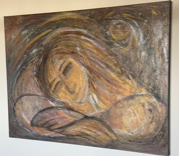
To begin healing, Sally turned to art. Through colour, texture, and brushstrokes, she gave form to emotions that words alone could not express. Her paintings became a visual record of her journey through trauma, despair, fear, and, ultimately, recovery.
The walls of their home were lined with her artwork, each canvas representing a different chapter in that journey. As she walked me through the collection, I could see her healing unfold. The earliest paintings were dark, raw, and deeply unsettling, reflecting the pain and fear she had carried for so long. As the series progressed, subtle changes in colour, light, and composition revealed a gradual emergence of hope and resilience.
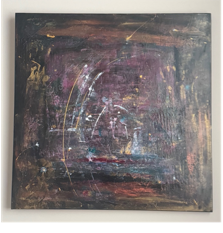
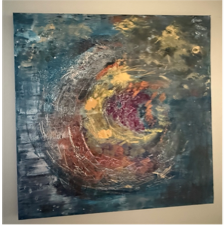
Some of Sally’s early work
Over the course of a single year, the colours, themes, and emotions in Sally’s paintings began to change. Darkness gradually gave way to light. Despair slowly yielded to hope. The trauma that had once consumed every aspect of her life began to loosen its grip.
Sally believes that art became the means by which she quieted the relentless voice of anxiety and began to reclaim her life. Her psychiatrist shares that view, recognizing that the creative process became an essential part of her healing, working alongside therapy to help her find her way forward.
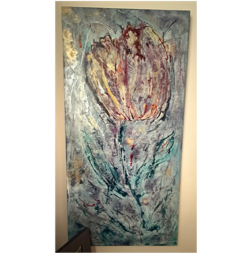
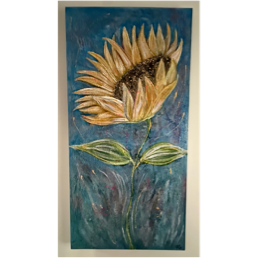
As the healing takes hold
A few days after I left Okotoks, Sally sent me a message that has stayed with me ever since:
“I didn’t tell you last night, but it was all officers that hurt me in the Army. It was actually quite a big deal for me to know you were an officer, and also to know I wasn’t scared of you either.”
Of all the conversations I had during The Road To Valour, this was one of the most humbling.
This ride was never just about the kilometres. It was about the people I met along the way, the trust they placed in me, and the stories they felt safe enough to share. Sally’s story reminded me that healing is possible, that it often takes many forms, and that sometimes simply listening can be one of the greatest gifts we can offer another person.
Healing along The Road To Valour
 The Road To Valour