
This is a story I have been looking forward to telling. It is an unusual tale of valour, unique in Canadian history, and it centres on the only Victoria Cross ever awarded for actions taken on Canadian soil. This is the story of Timothy O’Hea, VC.
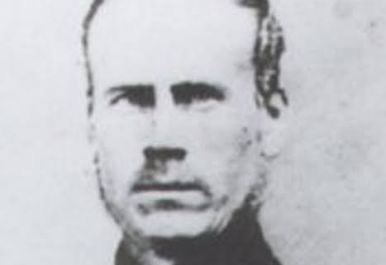
The Butterfly Effect is often used to describe history and human lives—how a single decision, a moment of courage, or an act of restraint can ripple forward, shaping events far beyond what anyone could have foreseen. A brief choice made in an instant can influence generations that follow. This unusual story, and what might have happened had O’Hea not acted, carries implications that reach into my own life in ways that may not be immediately obvious. I look forward to returning to that connection at the end of this post.
Timothy O’Hea (also spelled O’Hee) was born in 1843 in Schull, County Cork, Ireland. Little is known about his early life until he enlisted in the Rifle Brigade of the British Army, serving as a private in the 1st Battalion. In 1866, he was stationed in Québec during the tense period of the Fenian Raids
The Fenian Raids
The Fenian Raids (1866–1871) were a series of armed attacks launched by the Fenian Brotherhood against British North America. The Fenians were Irish-American veterans of the U.S. Civil War whose aim was to pressure Britain into granting independence to Ireland by seizing Canadian territory as leverage. They launched several raids against British North America between 1866 and 1871, mainly from the United States. While these raids were militarily unsuccessful, they exposed weaknesses in colonial defence and helped accelerate Canadian Confederation in 1867.
Supporting British Army units, Canadian militia units—many inexperienced—mobilized in response, gaining early combat experience and shaping Canada’s emerging national military identity. In response to the raids, troops, volunteers, and supplies moved feverishly along Canada’s fragile transport network.
“Everyone else ran”: the VC‑winning action
On the 9th of June, a train transporting 800 German immigrants and 2,000 pounds of ammunition from Québec City to Montréal halted in Danville. Four soldiers, including O’Hea, were assigned to guard the boxcar holding the ammunition – a routine task until the unthinkable happened.
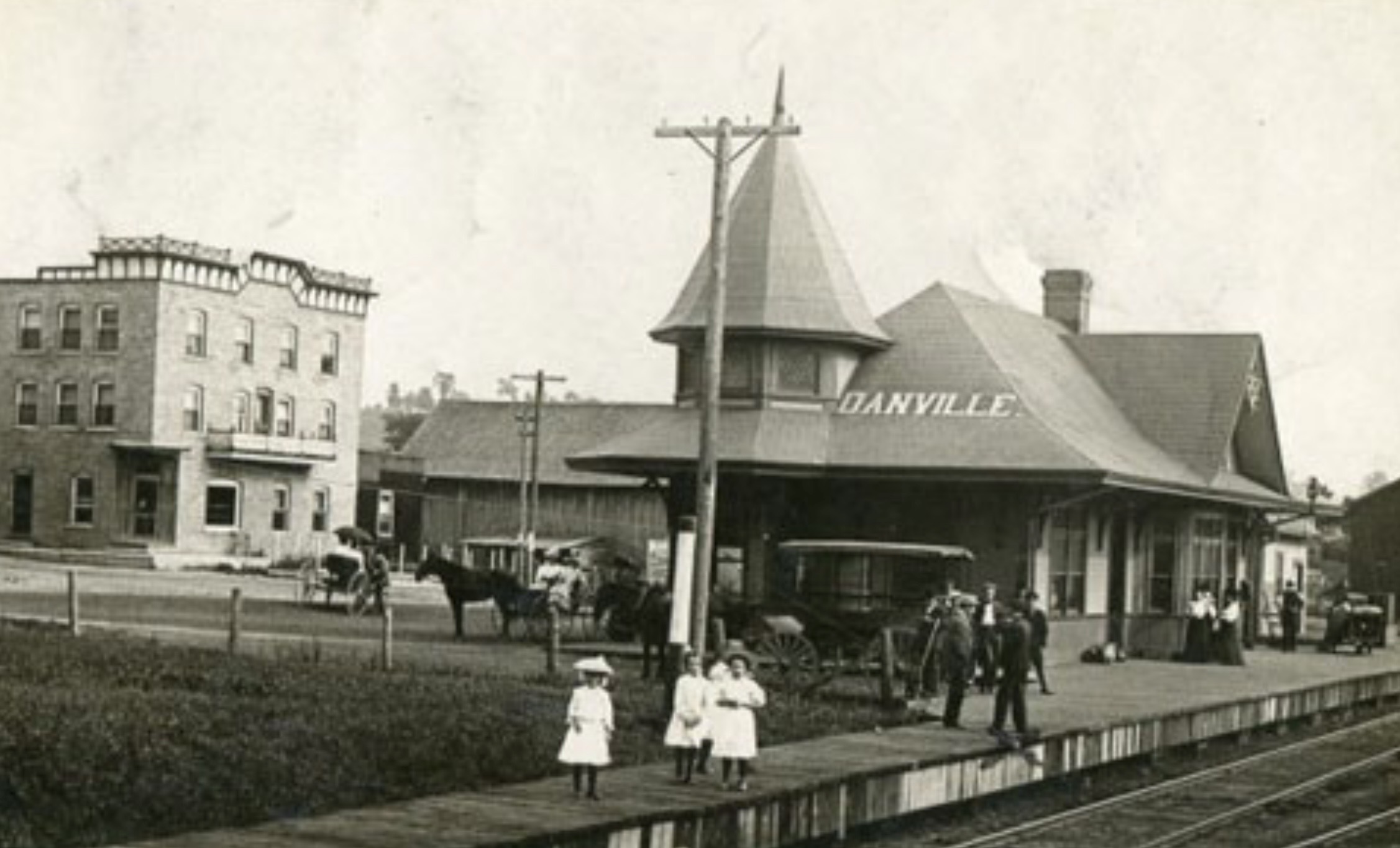
Late that afternoon, a fire broke out in the boxcar the soldiers were guarding. Realizing the imminent danger, O’Hea sounded the alarm, and the train car was quickly disconnected. But when he turned for help, he discovered that the railwaymen, his fellow soldiers and all civilians had fled to safety, leaving the German immigrants who were locked in converted boxcars so they would not disembark before reaching their destination to face almost certain death.
What followed is the sort of scene that would look implausible in fiction.
As flames licked through the wooden car, railway staff and even some soldiers scattered in fear of an explosion that would obliterate the station, the train, and the tightly packed immigrant families. O’Hea did the opposite. He seized the keys from his sergeant, unlocked the blazing boxcar, and climbed inside alone. He tore open burning ammunition cases and threw them clear of the car to prevent the fire spreading deeper into the powder. Finding no one willing to help, he made nineteen trips to a nearby creek, hauling buckets of water back to the car and dousing the flames bit by bit.
For nearly an hour, O’Hea fought the fire virtually on his own while the immigrants, unaware of how close they were to catastrophe, reportedly cheered him on. Only when the worst of the flames were out did others return to assist in cooling the car and transferring the ammunition to a new wagon. Eventually the train, still carrying its human cargo, resumed its journey to Montreal.
Had the powder and ammunition detonated, hundreds of civilians, railway workers, and soldiers would almost certainly have been killed. O’Hee’s cool courage prevented what might have been one of the worst peacetime disasters in early Canadian history.
The only Victoria Cross for actions in Canada
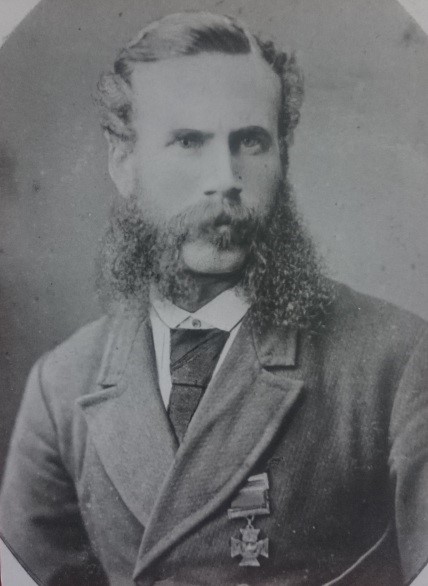
For this “courageous conduct…on the occasion of a fire which occurred in a railway car containing ammunition, between Quebec and Montreal, on the 9th of June 1866,” Timothy O’Hea was awarded the Victoria Cross. His decoration was gazetted on 1 June 1867, having already been presented to him in Canada earlier that spring.
Two aspects make his VC particularly noteworthy:
- Although Ninety-nine people with Canadian ties have been awarded the VC, O’Hea’s is the only one given for an act actually performed on Canadian soil.
- At the time, VC regulations still allowed awards for acts of extreme bravery even when no enemy was present. O’Hea’s firefighting feat is one of only six such awards in the entire history of the VC. Later, in 1881, the criteria were tightened to require gallantry “in the presence of the enemy”.
A short, mysterious life after heroism
Despite his fame in the Gazette, O’Hea’s later life remains shadowy. Most accounts agree that he died in 1874 in Australia, probably while involved in a search related to the long‑vanished Leichhardt expedition, in the harsh environment of what is now outback Queensland. His supposed grave near Noccundra Station is unmarked and the exact circumstances are uncertain, adding a layer of mystery to his story.
His Victoria Cross itself turned up years later in an Australian museum drawer before finding a permanent home with the Royal Green Jackets (Rifles) Museum in Winchester, England, where his name appears on the Rifle Brigade’s roll of honour.
Why Timothy O’Hee’s story still matters
O’Hea’s act of bravery links multiple strands of 19th‑century history: Irish migration, imperial defence, the Fenian raids, and the story of Canada on the eve of Confederation. It reminds us that heroism is not always about charging an enemy position; sometimes it means walking alone into a burning boxcar while everyone else runs.
For Canada, his Victoria Cross underlines how imperial conflicts and anxieties spilled onto this side of the Atlantic, even before 1867. For students of military history, it stands as a rare example of the VC awarded for saving lives rather than taking risks in battle—yet no less courageous for that distinction.
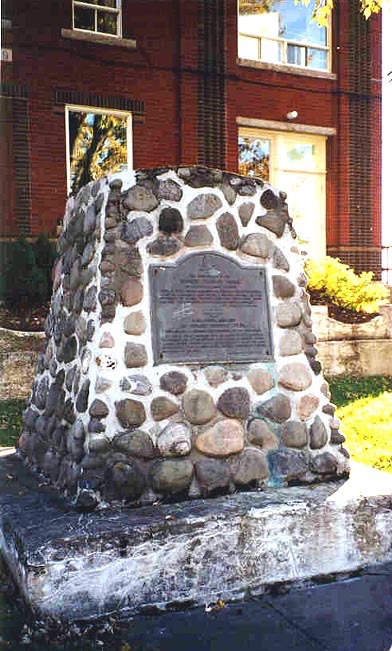
If you stand beside a quiet railway line in Quebec today, it is almost impossible to picture a packed immigrant train, a blazing ammunition car, and a lone rifleman fighting fire with a bucket. But that is where Canada’s only on‑soil VC was earned, and why Timothy O’Hee’s name deserves to be remembered.
How Timothy O’Hea’s and my story intersect
Timothy O’Hea’s actions in 1866 took place in Danville, Québec—a quiet town in the Eastern Townships that today has fewer than 4,000 residents. While no precise census exists for that year, it is reasonable to estimate the population at roughly 500 to 800. Danville is also the hometown of my Canadian ancestors. My grandfather, Merrick Donahue McCracken, MC, MM, who I have written about was born there and is buried there.
Had O’Hea not taken the extraordinary step of extinguishing the flames aboard that boxcar, the consequences would have been catastrophic. Had he followed the lead of his sergeant and the railway personnel, the inevitable explosion of 2,000 pounds of gunpowder would without question have killed the 800 German immigrants in the adjacent railcars and devastated most of the town of Danville itself. Among the likely casualties would have been my great-great-grandparents.
But, Timothy O’Hea chose a different path and in doing so, he preserved not only lives and a town, but futures yet unwritten—families, generations, and stories that would follow. His courage reminds us that acts of valour are never confined to a single moment; they echo forward in ways the individual can never fully understand. More than a century and a half later, his legacy lives on, not just in history books, but in the lives that were allowed to continue.
Mine is one of them.
Ride The Road To Valour

