
Flipping through the latest issue of Legion Magazine, the bi-monthly publication of the Royal Canadian Legion (RCL), I came across an article by Canadian military historian Brad St. Croix about Lieutenant (N) Robert Hampton Gray, the last Canadian to be awarded the Victoria Cross (VC). As I read, it struck me: it was time to start exploring the story of Canada, the VC, and how it connects to my ride, The Road To Valour.
The Victoria Cross is one of those medals that carries more weight than metal ever could. It’s the highest award for bravery in the British Commonwealth and it has been a symbol of courage, sacrifice and grit for over 160 years. In fact, it is the highest decoration awarded in the Commonwealth, higher than any award granted to the monarch.
But how did it come to be and what makes it so special?
How It All Started
The story begins during the Crimean War in the 1850s. This was one of the first conflicts where war correspondents were reporting directly from the front lines and their dispatches back home were full of stories about the suffering and hardships of soldiers and, most importantly, about incredible acts of bravery—many carried out by ordinary soldiers who otherwise went unnoticed.
The public began to demand that these men be recognized. In response, Queen Victoria created the Victoria Cross in January 1856. The idea was simple but revolutionary: the medal could be awarded to anyone, no matter their rank or background, as long as they showed outstanding courage “in the presence of the enemy.” That meant a private could stand shoulder to shoulder with a general when it came to being honoured for bravery.
A Medal That Means More Than Metal
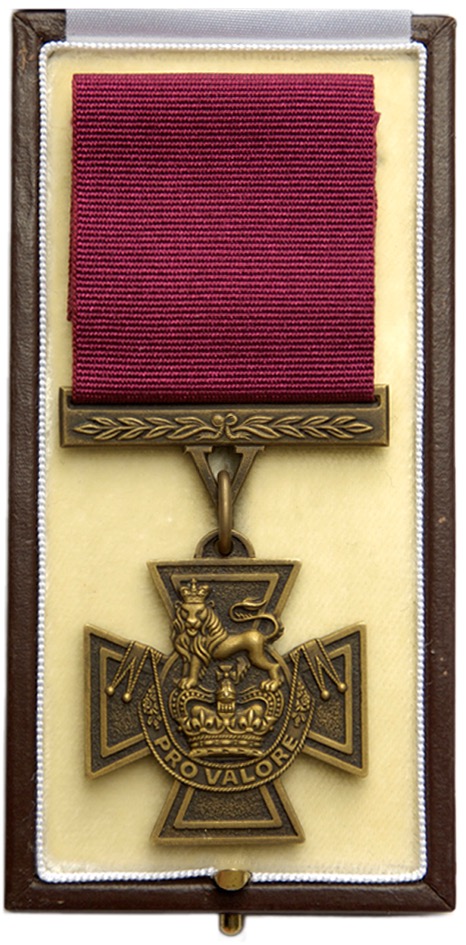
If you’ve ever seen a VC, you know it doesn’t look flashy. It’s a bronze cross with a lion, a crown and the words “FOR VALOUR.” That was the point—no gold or silver, just a straightforward design that reflected the focus on deeds rather than status. That design has remained unchanged from the original design.
There’s a bit of legend attached to the medal, too. According to that legend, the original VCs were made from the bronze of Russian cannons captured during the Siege of Sevastopol. Whether that’s entirely true or not, it adds to the mystique. And the crimson ribbon? That’s a nod to the blood shed on the battlefield.
How It’s Awarded
The Victoria Cross has always been rare—and deliberately so. Acts of bravery had to be witnessed and verified and nominations often came directly from fellow soldiers. Many have been awarded posthumously, making the medal not just an honour, but also a tribute to those who never made it home.
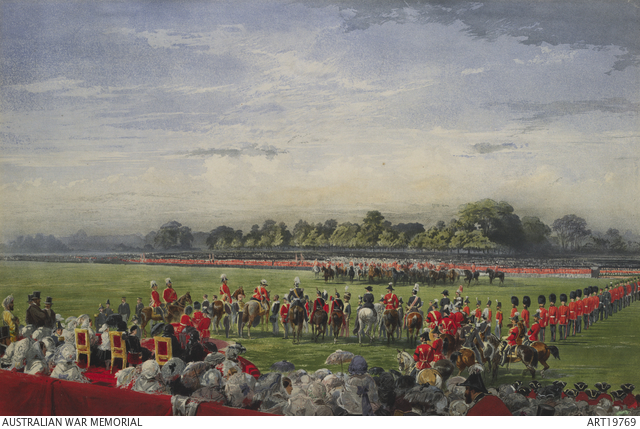
The very first ceremony was held in Hyde Park in June 1857. Queen Victoria herself presented 62 medals to men who had fought in the Crimea. That event set the tone: the VC wasn’t just a decoration—it was a public recognition of extraordinary courage. While one Canadian officer serving with the British Army, Lt. Alexander Roberts Dunn, had been awarded the VC during the Charge of the Light Brigade, he was serving with his regiment in another not present at the Hyde Park ceremony.
Why It Still Matters
Since its creation, the VC has been awarded only 1,364 times. This includes three individuals who have been awarded the VC twice. Ninety-nine Canadians (or non-Canadians serving with Canadian units) have been awarded the VC. It should also be noted that five Australians and one New Zealander have been awarded their own national VC. While a Canadian Victoria Cross was instituted in 1993, it has yet to be awarded – more on that issue in my next post.
Each award represents a single act of bravery that stood out among countless others on the battlefield. The VC has never been about rank, wealth, or background—it’s about a moment when someone put everything on the line for others. Over the years, the medal has taken on a life of its own. It’s more than a piece of bronze on a ribbon—it’s a reminder of what heroic act looks like when it matters most.
I’ve had the privilege of standing before several VCs, and each time it has been a powerful experience. The Canadian War Museum (warmuseum.ca) in Ottawa holds 42 VCs, including the three awarded to the legendary Valour Road trio. I’ve also seen the medal awarded to Smokey Smith, proudly displayed at the Seaforth Highlanders’ museum. To witness these emblems of extraordinary courage—moments of true Canadian valour captured in bronze—left me with chills.
In future posts I will highlight Canadians who have been awarded the VC, especially those who I will be honouring during The Road To Valour. I also want talk about the only VC awarded for heroic action within Canada.
Ride The Road To Valour
 The Road To Valour