
This has been a long time coming. I think I’ve let the noise in my head take over, but something special gave me the push I needed. I’m thrilled to welcome my first Gold Corporate Sponsor: Jonathan Dobroskay of Edward Jones. Not only does he manage my (admittedly modest) finances, but he’s also a friend through the Rotary Club of Lake Country and a volunteer firefighter in the community.
When Jonathan learned about The Road to Valour, he was so inspired that he committed to donating all of his income as a firefighter to the cause. As he put it, firefighting is his way of serving the community—so what better use for that income than supporting his fellow first responders?

If you’re looking for a financial advisor, I can’t recommend Jonathan enough.
Colonel Sir Samuel Hughes was among the most influential and controversial figures in Canadian military history. As Canada’s Minister of Militia and Defence from 1911 to 1916, Hughes played a crucial role. He mobilized the country’s forces for World War I. His leadership was marked by both innovation and controversy, shaping Canada’s war effort in ways that had lasting impacts.

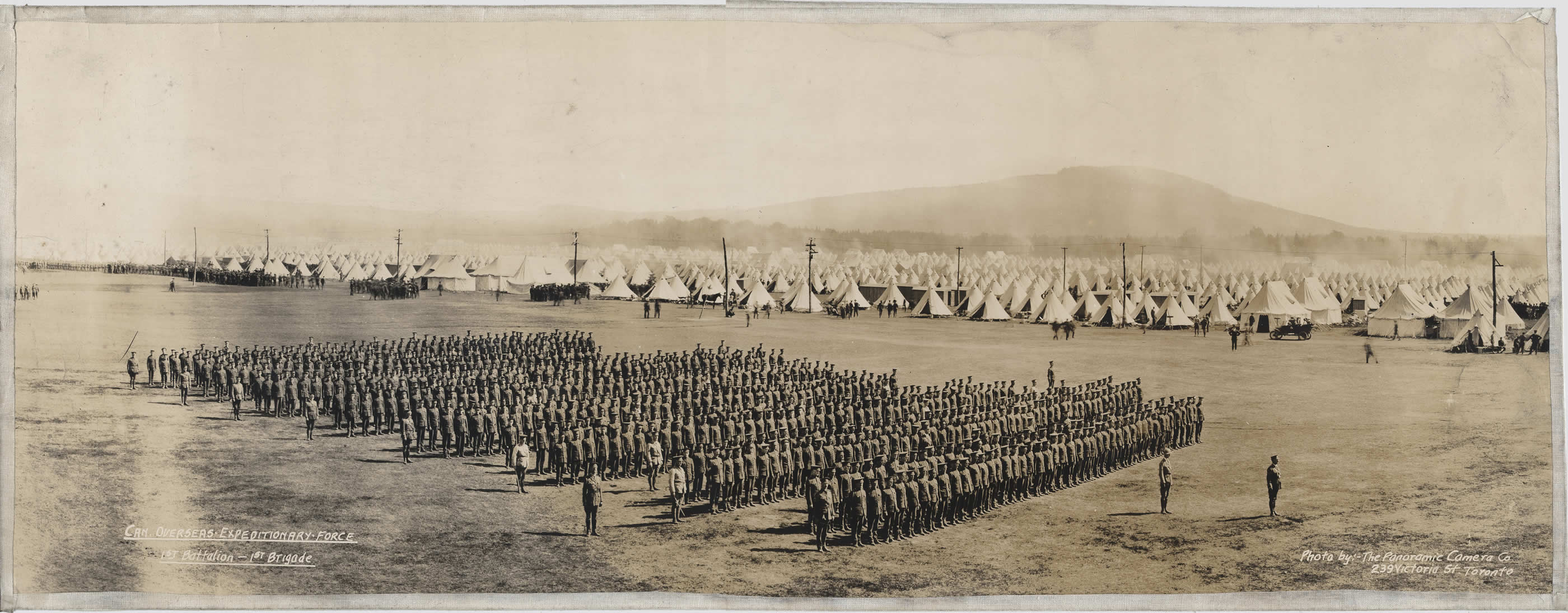
Hughes was instrumental in the rapid recruitment and training of the Canadian Expeditionary Force (CEF). He was a strong believer in volunteerism, convinced that citizen soldiers were superior to professional soldiers. Hughes personally oversaw the creation of training camps. The most notable was Camp Valcartier in Quebec. It became the main training ground for Canadian soldiers. His enthusiasm and nationalism helped rally the country. Yet, his preference for Canadian-made equipment caused significant problems on the battlefield.
Patronage in Equipment Supply
Sam Hughes was a staunch nationalist who wanted Canada to produce its own weapons rather than relying on Britain. As a result, he became notorious for corrupt procurement practices. He awarded contracts that favoured his friends even when they provided inferior products.
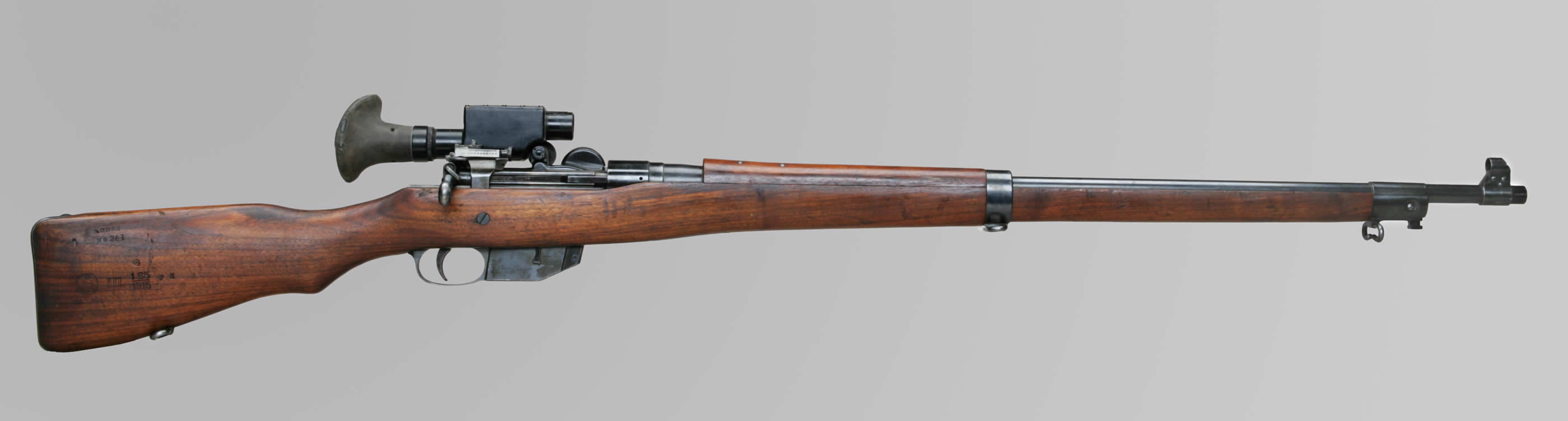
One such contract was for the Ross Rifle. The Ross Rifle was a Canadian-made, straight-pull bolt-action rifle chambered in .303 British, produced from 1903 to 1918. The rifle was highly accurate in controlled conditions. However, in the muddy trenches of World War I, its performance was problematic. This led to frequent jamming and operational failures. The weapon was frequently discarded in the field whenever a Lee-Enfield was found. Ironically, its accuracy made it a favourite and highly sought-after weapon for snipers.

Hughes was also instrumental in developing and promoting one of the most impractical pieces of military equipment issued to any army during WWI: the MacAdam Shield Shovel. This was a combination of a shovel and an (apparently) bulletproof shield. The idea was that each soldier could carry a trenching shovel that could also be used as a shield for returning fire. However, it was completely impractical. Soldiers found it too heavy to carry along with their other equipment, and the hole in the shovel made it even more useless for digging.
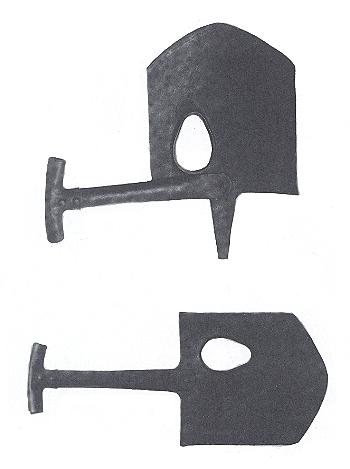

The failure of the MacAdam Shield Shovel, along with the Ross Rifle controversy, exemplified Hughes’ poor military judgment.
Garnet Hughes and Nepotism
At the start of the war, Sam Hughes’ son, Garnet Hughes, was an officer in the Canadian militia. Using his substantial influence to advance his son’s career, he ensured that Garnet rose rapidly, reaching the rank of Brigadier.
While Garnet achieved high-ranking positions, including commanding the 10th Canadian Infantry Brigade, he never received full command of a division. His leadership during the Battle of Mount Sorrel in 1916 was criticized, with some suggesting that he lacked the necessary tactical ability.
Nevertheless, Sam Hughes attempted to have Garnet appointed as a division commander. The efforts to promote Garnet created tensions within the military. Lieutenant-General Sir Julian Byng, the British officer commanding the Canadian Corps, resisted the promotion, believing Garnet lacked the necessary leadership skills. Similarly, Major-General Arthur Currie, commander of the 1st Canadian Division, who later became commander of the Canadian Corps, did not view Garnet as a capable leader and opposed his advancement.
Legacy
Sam Hughes’ leadership style was often erratic and dictatorial. He frequently clashed with military officials and ignored British military advice. His insistence on outdated methods and favouritism in appointing officers led to inefficiencies. By 1916, the growing criticism of his management, along with the disastrous performance of the Ross Rifle in combat, led to his dismissal by Prime Minister Robert Borden.
Despite his flaws, Hughes’ efforts helped establish Canada’s military reputation during WWI. The Canadian Corps went on to achieve significant victories, such as at Vimy Ridge in 1917, demonstrating the strength of the force he helped create. However, his legacy remains divisive—he is remembered as both a passionate patriot and a deeply flawed leader whose decisions had serious consequences.
Follow The Road To Valour
 The Road To Valour