
Today I want to start writing about Canadian military history. I have chosen to start with World War 1. Today, 21 November, 2023, is also a significant day in the life span of The Road To Valour project. Today marks 18 months before the ride begins.
It should be noted that Canada was a participant in the South African War which preceded WW1. I will address that participation with a reflection upon the five Canadian Victoria Cross winners in a future post.
As a reminder to everyone, I am, by training and military profession, an engineer. I am not an historian, although I do enjoy reading and dabbling in matters of an historic nature. I promise that I have tried to be as precise and thorough in my statements as possible. I recognize that many facts and interpretations of those facts may have been lost for the sake of brevity. If you find that I have inadvertently missed important details or glossed over some, please feel free to comment.
The Lead Up to War
To this day, Canada has often been described as an “unmilitary” country. In many respects that was and continues to be true. However, when called to action Canada has always responded and fought well above its weight class.
Let’s quickly review the events that triggered the War to End All Wars. After this, we will discuss Canada’s involvement in World War 1 (WW1). Historians pretty well agree that European Imperialism, Militarism, and Nationalism were significant factors. A complex web of Alliances among the crowned heads of the major powers also fueled distrust and polarization within Europe. They also agree that the tipping point was the assassination of the Archduke Franz Ferdinand in Serbia on 28 June 1914. Ferdinand was the heir apparent to the Austro-Hungarian Empire and Austria blamed nationalists in Serbia for the assassination.
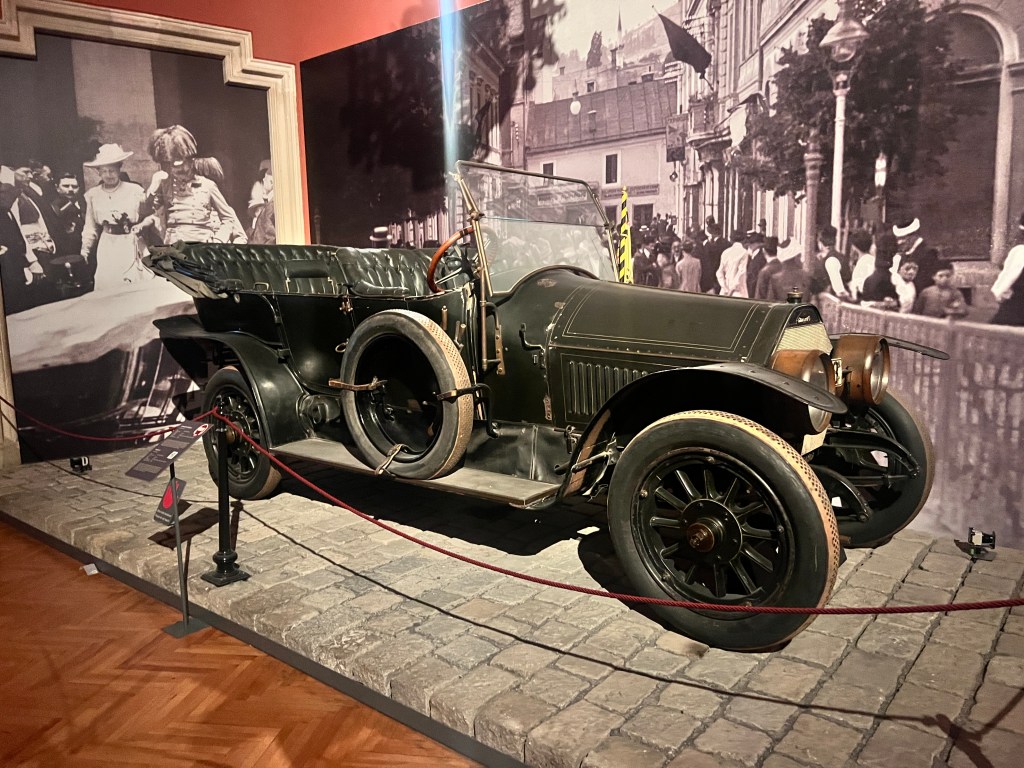
Due to these alliances, when Austria declared war on Serbia, Russia was compelled to support Serbia. This in turn triggered a series of diplomatic moves to mobilize friendly forces, while attempting to demobilize potential enemy forces. By 4 August 1914, Britain, as compelled to do as part of their alliance with Russia, declared war on Germany. Ironically, the crowned heads of Britain, Germany, and Russia were cousins. They wielded significantly greater power than today’s constitutional monarchs. Sibling rivalries at their worst!
“When Britain is at war, Canada is at war.
Sir Wilfred Laurier, Prime Minister of Canada 1910
There is no distinction.”

In 1914, Canada was a self-governing dominion of the British Empire, but did not control its foreign affairs. Newfoundland, which did not become a province of Canada until 1949, was also an independent dominion of the Empire. So as of 4 August 1914, both Canada and Newfoundland found themselves at war.
At the time, the population of Canada was just under 8 million and that of Newfoundland was 242,000. Close to 619,00 Canadians enlisted with the Canadian Expeditionary Force (CEF) and 12,000 Newfoundlanders would also answer the call.
As I was preparing to write this post, I thought that I could lump Newfoundland’s participation in as part of the Canadian contribution to the war. Then, I started reading into the history of Newfoundland in the war. I realized that would be doing a major disservice to both Canada and Newfoundland. The war and its after-effects on Newfoundland are so significant that there needs to be a separate post dedicated to Newfoundland. Watch for that post in the coming weeks.
Canada Mobilizes
Canadians took pride in their membership in the British Empire with its very prominent military tradition. Canada was automatically brought into the war when Britain declared war. However, Canada had the right to determine the country’s level of involvement. At the time, Canada had only 3,110 men in the Active Militia spread out over 9 provinces. Needless to say, Canada was hopelessly ill-prepared for a war. Prime Minister Robert Borden chose not to mobilize the Active Militia. Instead, he asked Colonel Sam Hughes, the Minister of the Militia and Defence, to form a new Canadian Expeditionary Force (CEF).
On 10 August 1914, the government set the strength of the First Canadian Contingent for overseas service at 25,000. This was the figure requested by London. Hughes was eager to lead. He wanted to personally coordinate a speedy call-up and chose to forgo the established mobilization plan. Hughes issued a more direct call to arms.
Men from all classes and ages rushed to enlist at armories and militia bases across the country. They all traveled to a single, hastily prepared camp at Valcartier, Québec, for equipment, training and preparation for war. Eventually, the camp held over 35,000 troops.


In October 1914, the First Contingent of the CEF — 30,617 strong — made the voyage for England.
 The Road To Valour